Table of Contents
TL;DR
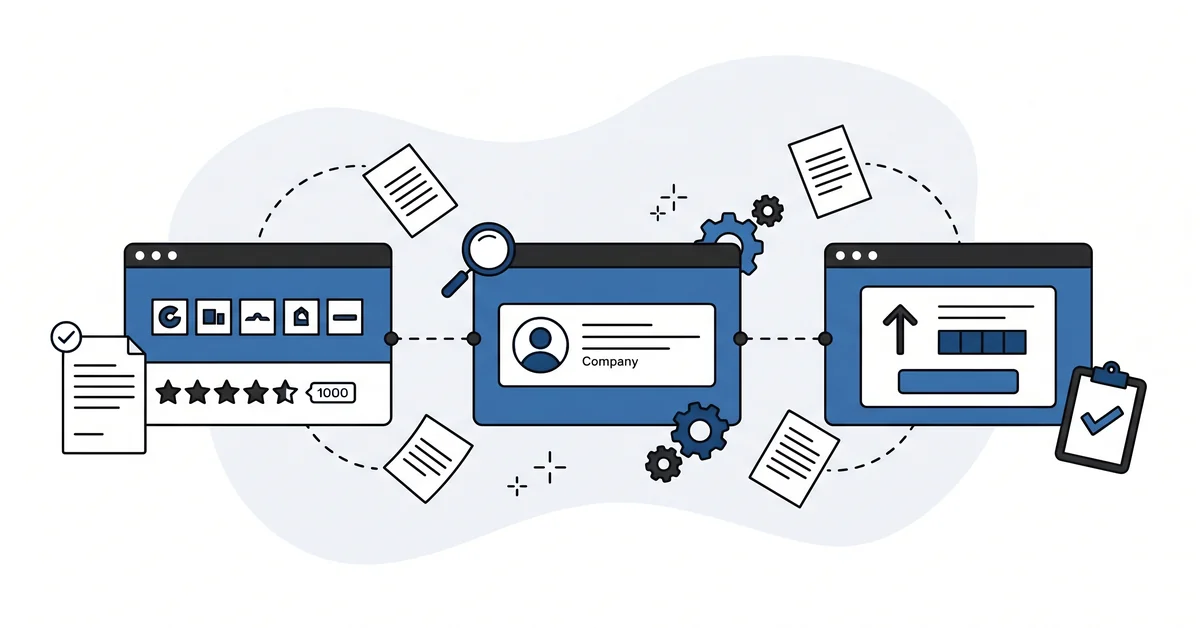
- Proof on a landing page belongs in three specific zones, not scattered through the page. Random placement underperforms placement at decision moments.
- Hero-adjacent proof (logo bar, count, aggregate rating) answers "is this for me" before the buyer scrolls. The buyer either acts on the answer or keeps reading.
- Mid-page proof (a named testimonial with role and company) validates the value-prop introduction. The role and the company carry more weight than the testimonial sentence.
- Pre-CTA proof (a specific result with a named buyer) reduces the moment-of-decision anxiety that sits between intent and action. Most pages skip this slot.
- The audit is a one-page exercise. List every piece of proof on the current page. Name the zone each one is sitting in. Move the strongest piece into the slot that is empty.
A small business adds three testimonials to a landing page. The conversion rate sits at one and a half percent before the change. The rate sits at one and a half percent after the change.
The owner adds two more testimonials. The rate moves from one and a half percent to one and six tenths. The team agrees the page now feels stronger.
The page does feel stronger. The buyer feels nothing different. Five testimonials sat on the page in a column the buyer scrolled past on their way to the button.
The page did not need more proof. The page needed the same proof in a different place. Proof placement is its own craft decision, and most pages skip it.
Why does adding more testimonials rarely move the conversion rate?
Adding testimonials feels like progress because the page looks more credible from the editor’s seat. The buyer sees the page from a different seat. The buyer sees a column of quotes between two paragraphs of body copy and skims past it.
The fix is not removing the testimonials. The fix is moving them.
A testimonial sitting in the middle of the page in a column does the same job a stock photo does. The buyer registers that proof exists and keeps scrolling. A testimonial sitting one inch above a button reduces the anxiety that sits between intent and click.
The same words. A different job. A different conversion outcome.
Most pages have the proof they need. Most pages do not have the proof in the place where the proof has work to do.
What does "proof" mean on a landing page, in plain language?
Proof is anything that makes the buyer believe the claim on the page is real. The page makes a claim. The proof tells the buyer the claim has been kept before, with somebody who looked enough like them.
Proof comes in five common shapes:
- A logo bar of named companies.
- A count or aggregate rating ("9,400 small businesses use this").
- A named testimonial with a role and a company.
- A case-study summary with a specific result.
- A demonstration in the form of a screenshot, a video, or a downloadable artifact.
Each shape carries a different weight at a different beat in the page. A logo bar above the fold answers a question the buyer is asking in the first two seconds. A named testimonial in the middle of the page answers a question the buyer is asking after the value-prop. A specific result above the button answers the question the buyer is asking with their hand on the mouse.
Proof is plural and zoned. Treating it as a single bucket is the source of most placement mistakes.
Where does proof belong near the hero section?
Hero-adjacent proof answers one question. "Is this for me." The buyer scanning the hero is checking whether the offer is in their category and whether anyone like them has used it before.
The shapes that work in this zone are the recognition shapes. A row of named-company logos for a B2B product. A specific count of customers for a B2C tool. An aggregate star rating with the review count next to it.
A testimonial sentence does not work in this zone. The buyer scanning the hero will not stop to read a quote. The buyer will read a logo or a number in one second. The hero zone is for proof that lands without a sentence.
The Nielsen Norman Group eye-tracking research showed that only 16 percent of web readers read word-by-word — 79 percent scan. The hero zone has to work for the scanners. Logos and numbers scan. Quotes do not.
Where does proof belong in the middle of the page?
Mid-page proof sits after the value-prop introduction and before the objection-handling section. The buyer at this beat has heard the claim and is asking whether the claim is real for somebody specific.
The shape that fits this beat is the named testimonial with a role and a company. "Maria Santos, head of operations at a 40-person agency in Atlanta, used the tool for six months and cut her weekly review meeting by half." The role does work the testimonial sentence cannot do. The company name does work the role cannot do.
A buyer reading the mid-page testimonial recognizes the company size or the role and projects themselves into the buyer’s seat. The projection is what the testimonial is for. A quote without a role and a company does not earn the projection.
Two named testimonials are usually enough at this beat. Three is fine. Five becomes a column the scanners skip again. The mid-page zone is for the strongest two named testimonials, not for the inventory.
Where does proof belong right before the call-to-action?
Pre-CTA proof is the slot most underperforming pages leave empty. The buyer in this beat has decided the offer is plausible and is looking for one more reason to click. Anxiety sits in this beat. Proof reduces the anxiety.
The shape that fits is the specific result with a named buyer. "After three months on the plan, the agency in Denver moved from one paid client to seven." A number plus a name plus a result. The buyer who reads that sentence with their hand on the button reads it as confirmation. The path the page describes is a path somebody already walked.
The pre-CTA proof is not a fresh testimonial. The pre-CTA proof is the strongest specific result the page already has, moved into the slot where the buyer is making the decision.
Most small-business pages keep this slot for a guarantee or a button label. The guarantee is fine. The button label is fine.
The slot still wants a sentence of proof above the guarantee. That sentence is what closes the gap between intent and click.
Which testimonials are worth more than the count of testimonials?
Three testimonial properties carry most of the weight. A specific outcome that is testable. A named buyer with a role and a company. A measurable result attached to a time frame.
A testimonial that says "the team is great, very responsive" carries no weight. The sentence is true and useless. The buyer cannot tell from the sentence whether the team will be great for them.
A testimonial that says "we cut our onboarding time from four weeks to ten days in the first quarter" carries weight. The sentence is testable. The buyer can imagine themselves running the same calculation. The named buyer at a named company in a named role makes the calculation concrete.
The audit move is mechanical. Read every testimonial on the page. Cut every one that does not name a specific outcome with a number, a buyer, and a time frame. The page often loses half its testimonials and earns more conversions, because the remaining testimonials carry weight the cut ones could not.
How does proof placement change for AI-search traffic?
Buyers arriving from a ChatGPT or Perplexity recommendation read pages slightly differently than buyers from a plain Google search. The chat surface has done some of the comparison work upstream. The buyer often arrives further along the awareness path than the same query would deliver from a Google result.
The shift changes which proof zone matters most. The hero-adjacent logo bar carries less weight, because the answer engine has already done the credibility check the logos used to do. The pre-CTA specific result carries more weight, because the buyer arrived ready to decide and is looking for the closing reason to click.
The honest hedge belongs here. The 2026 named-source literature does not contain controlled studies on proof-zone weight by traffic source on small-business pages. The shift described is reasoned synthesis from buyer-behaviour patterns named in adjacent sources, not a direct empirical claim. A small business running both Google and AI-search traffic should treat the synthesis as a hypothesis to test, not as a settled finding.
Other questions worth answering
What does Eugene Schwartz’s 1966 awareness spectrum say about which credibility shape works hardest?
Eugene Schwartz’s 1966 awareness spectrum, the dominant copywriting taxonomy in 2026, puts buyers on five rungs from Unaware to Most Aware. Each rung wants a different shape of credibility, not a higher count.
Most Aware buyers want a specific outcome with a named buyer. Problem Aware buyers want recognition that somebody like them solved this.
Pick the rung your main traffic arrives on. Then choose the shape that rung wants.
How do I ask a customer for a quote that includes a measurable outcome?
Three open questions, sent a week after the project closed, do most of the work. Ask what improved, by how much, and over what window.
The voice-of-customer pattern, formalized at Copyhackers around 2011, says the buyer’s own words become the testimonial. The buyer’s answer to the second question becomes the sentence you keep.
If the customer answers vaguely, the quote will not earn its slot. Question quality caps quote quality.
Does a money-back guarantee help or hurt the close on a small-business offer?
Yes, when the buyer hesitates to try without a safety net. The guarantee cuts the cost of being wrong. It does not lift the value of being right.
A longer refund window outperforms a short window on most digital offers. Cold-feet buyers want time to live with the purchase before committing.
Guarantees hurt when the writing sounds nervous. ‘Risk-free’ and ‘no questions asked’ carry less weight than a dated promise.
Why do scanners fixate on bold key words and skip surrounding body copy?
Because the reading brain treats a web layout as a visual map first. The Nielsen Norman Group’s 2006 eye-tracking work named four reading patterns — F, layer-cake, spotted, and marking.
Scanners hunt for visual landmarks. Bold text, numbers, named companies, and short lines all signal ‘something specific lives here.’
Use bold for one or two phrases per block. Save it for the claim the buyer would screenshot.
Which testimonial would you move first on your current page?
Open the page in one tab and a notebook in the other. Read the page from top to bottom. Write down each piece of proof and the zone it currently sits in.
Three zones. Hero-adjacent. Mid-page. Pre-CTA.
If the pre-CTA zone is empty, find the strongest specific result on the page and move it into the slot directly above the button. Keep the result in the original location too if the page needs it there. The same result earns its keep in two zones when the page is long enough.
If the hero-adjacent zone has a testimonial sentence in it, replace the sentence with a logo row or a count. Move the testimonial down to the mid-page zone where it will earn the buyer attention the hero scan will not give it.
For more on the awareness layer that decides which proof shape lands hardest, see the five awareness levels: why your landing page should pick one. For more on the framework structure proof slots into, see which copywriting frameworks for beginners actually survive AI.
If your small-business landing page has five testimonials and a one-percent rate, you can contact me here. Send the URL and one sentence on placement. Send the URL and one sentence on which buyer the page was built for.
I will run the three-zone audit and name the testimonial that should move first. There is no charge and no follow-up sales call.