Table of Contents
TL;DR
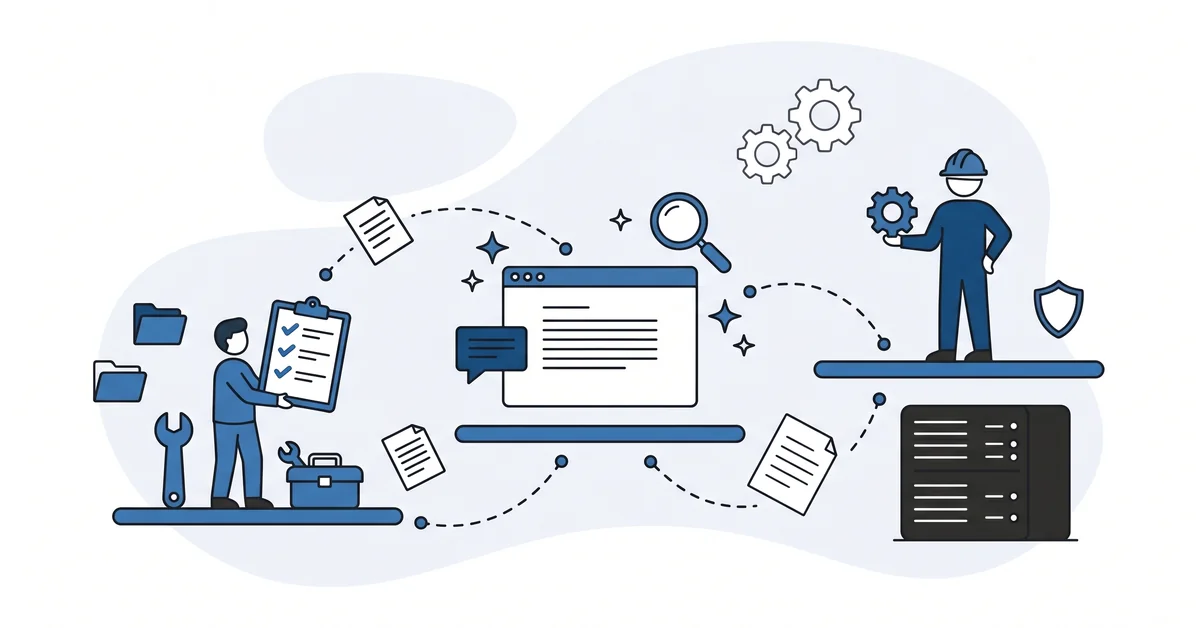
- The DIY-vs-hire question used to be binary. AI tooling has split the middle. The new shape has three tiers — pure DIY, AI-assisted DIY, and hire-a-developer.
- The DIY tier covers about 70% of a small site’s annual work. Content, plugin evaluation with the public-record check, theme tuning through the Styles panel, routine safe-updates, basic security setup. None of it requires code.
- The AI-assisted tier covers about 20%. Performance triage. Plugin conflict diagnosis. Drafting tricky meta descriptions and alt text. AI accelerates the reading and the explaining. The verdict on anything that touches the live site still belongs to a person.
- The developer tier covers about 10%. Security incident response. Payment-integration debugging. Custom REST API endpoints. Hosting migrations. The cost of the wrong move on each one exceeds a developer’s day rate, which is why each one is "stop trying alone."
- Most beginners overestimate the developer tier and underestimate the DIY tier. The middle is where the year’s small wins live.
WordPress is a tool. Like any tool, it asks three things of the person using it. Hand skills.
Knowledge of when to use it. Judgment about when to put it down and ask for help.
Most beginner WordPress site owners build the first two with practice. The third one is the harder one to learn alone. The signal that "I should hire a developer for this" is easier to read in hindsight than in the moment.
In 2024 the question was binary. Either the task fit on the DIY side, or it required a developer. The split was clear. Most beginner owners erred on the DIY side — saving the day rate, losing the day to a stuck plugin update.
In 2026 the question has three answers, not two. The new tools have split the middle. A beginner can now handle plugin evaluation, performance triage, and routine troubleshooting with chat help.
Work that used to require a freelance developer at fifty euros an hour. The decision is which tier the next task belongs to.
This post is the map.
Why is the DIY-vs-hire question harder in 2026 than it used to be?
The question used to fit on a single axis. Either you could do the task or you needed help.
The new axis has a middle. Pure DIY at the bottom — the tasks a beginner can complete with a checklist and a calm hour. Assisted DIY in the middle — the tasks a beginner can complete with a chat as a reading partner. Hire-a-developer at the top — the tasks where the cost of a wrong move exceeds a day rate.
The middle is the new variable. A year ago, performance triage on a small WordPress site was a freelance developer task. Now a chat reads the Page Speed Insights output and identifies the dominant slow component.
The chat explains the fix in plain English. The owner does the change. The developer was not needed.
The honest framing is "the new tools raised the DIY ceiling, not the top." The work that needed a developer in 2024 still does. The work that did not has gotten easier. The shape of the year’s WordPress to-do list shifted toward the middle.
The question to ask the next task is not "can I do this?" The question is "which tier?"
What can a small business owner reliably DIY in WordPress in 2026?
Five categories. None of them requires code.
Installing and configuring plugins from the WordPress directory after running the public-record check. The public-record check on a WordPress plugin handles the readme, the changelog, and the recent reviews. The owner reads the verdict and decides. No developer needed.
Writing and editing content in the block editor. Pages, posts, headings, images, internal links, basic structured data via the search-and-AEO tool. The block editor in 2026 handles what would have required HTML knowledge a decade ago.
Changing visual tokens through the Site Editor’s Styles panel. Body typography. Heading color.
Section spacing. Color palette. The change ripples through every page on the site without anyone touching theme files.
Running WordPress core, theme, and plugin updates with the safe-update workflow. Off-site backup first. Core, then themes, then plugins.
One at a time. Smoke test. Roll back if anything breaks.
Setting up two-factor authentication, login attempt limits, and off-site backups. The DIY-tier security baseline. Each task is a settings screen, not a code change.
The five categories cover most of the year’s work for a content-heavy small business site. The owner who learns the workflow once spends the rest of the year applying it.
Where does AI assistance actually pay off, and where does it overpromise?
AI pays off on the reading-and-explaining tasks.
Reading a plugin readme to surface the active maintenance status and the recent issues. Explaining a Page Speed Insights report in plain English. Translating a host’s vague "your site is slow" warning into a concrete checklist of what to check.
Reviewing a meta-description draft for hedging language and AI-filler vocabulary. Drafting alt text from an existing image. Naming color tokens consistently across a Styles panel.
The pattern is consistent. AI is fast at reading text and producing structured output from it.
Where the chat overpromises is on the writing-and-fixing tasks.
Generating "secure" plugin code from a one-paragraph prompt. The code looks plausible. It usually has at least one issue a developer would catch.
A missing capability check. A SQL escape that does not handle the actual input. A REST API endpoint without rate limiting.
Diagnosing a hacked site without seeing the live file system. The chat will produce a confident-sounding cleanup checklist. The checklist will miss something specific to the actual compromise.
Recommending a database migration script. The script may work for the textbook case the chat saw in training data. It may fail on the table-and-column variation your specific site has accumulated.
The honest pattern is that AI accelerates the read. AI does not own the verdict on anything that touches the live site directly. The verdict still belongs to a human — the owner for the DIY-tier tasks, the developer for the developer-tier ones.
What signals mean it is time to hire a developer?
Five signals. Each one is "stop trying to fix this yourself" in a different shape.
The site is hacked or showing a malware warning, and the host or a security plugin has flagged unfamiliar files. The cleanup is not a five-minute task. The cost of a wrong cleanup move is a wiped site or a deepened compromise.
A payment integration is failing in a way that loses transactions, and the failure is intermittent. Every minute the integration is down costs revenue. Intermittent failures are the hardest to diagnose without access to the payment provider’s logs and a debugging environment.
The site needs a custom REST API endpoint or a programmatic publishing pipeline. The REST API is the seam where developer-tier WordPress work begins for most small sites. AI writes plausible REST API code, but the SB-tier owner cannot evaluate whether the code is correct, secure, or rate-limit-aware.
A plugin conflict cannot be isolated through the bisection method, and the conflict touches an e-commerce or membership flow. The troubleshooting map for the four common WordPress problems covers the easier conflicts. When the conflict resists the bisection method, the next move is a developer who can read the source.
The hosting environment needs to change. PHP version migration. Server move.
Multisite consolidation. Each one has data-loss risk on a wrong move.
Each signal is a moment when the cost of the wrong move exceeds a developer’s day rate. The math favors hiring help.
What kinds of work should you never DIY on a WordPress site?
Three categories. Hard rules, not soft suggestions.
Security incident response. A hacked site. A 0-day vulnerability disclosed without a patch ready.
A host warning about malicious files in the wp-content directory. The cost of a wrong cleanup move is a wiped site, a deepened compromise, or both. The right move is to engage someone who has done it before, often a hosting provider’s security team or a freelance security specialist.
Payment-integration debugging. The site loses transactions every minute the integration is down. The fix often requires reading the payment provider’s logs the small business owner does not have access to. The DIY hour spent here costs more than the developer hour would have.
Custom code that touches wp-config.php or the file system permissions. The configuration file is the seam where a typo can lock the entire site out. The recovery requires shell access most beginner owners do not have.
AI writes confident-sounding wp-config edits. The edit that breaks the file produces no helpful error message.
The pattern across the three is the same. The cost of the worst plausible outcome is much larger than the cost of the developer day rate. Hire it out.
How do you find a good WordPress developer without overspending?
Three questions to ask any candidate before the engagement starts.
What is the most recent WordPress site you shipped, and can I see it live? A hand-built site with a clean structure is findable on a portfolio or via a quick walkthrough. Vague answers about "many client sites under NDA" are a small red flag.
Some NDAs are real. Total opacity rarely is.
How do you handle plugin updates on client sites after launch? Maintenance retainer, on-call rate, or hand-back? The answer reveals the long-term cost. A developer who hands the site back without an update plan is not the developer for the year-after-launch.
What is your approach to a site you did not build originally? A developer who asks for read-only access first to scope the work charges a sustainable rate. A developer who quotes a fixed price before seeing the codebase is guessing. The fixed price is either too high to cover the developer’s risk, or too low to deliver the work.
The three questions take ten minutes. They surface the developers who will be honest about scope and the ones who will not.
What does the DIY-AI-developer split look like for a typical small site?
Rough proportions over a year on a typical content-heavy small business site.
About 70% of the work belongs in the DIY tier. Content publishing. Plugin evaluation with the public-record check. Theme tuning through the Styles panel.
Routine safe-updates. Basic security setup. The DIY tier is where the small wins compound week over week.
About 20% lands in the AI-assisted tier. Performance triage when Page Speed Insights surfaces a slow component. Plugin conflict diagnosis after a failed update.
Troubleshooting a white-screen with the WP_DEBUG flag. Drafting alt text from a batch of images. Writing meta descriptions for tricky pages.
About 10% is developer-tier. A security incident if it happens. A payment integration with a real bug.
A hosting migration. An annual security audit. The 10% is the smallest tier by volume and the largest by cost-per-task.
The split tilts toward DIY for content-heavy sites and toward developer for e-commerce and membership sites. The middle tier is roughly the same share regardless. The takeaway for a small business owner is that 90% of the year’s WordPress work is doable without a developer in 2026.
Other questions worth answering
What changed about plugin trust after the 2024-2025 supply-chain compromises?
The vetting tier expanded. Before about 2024, a plugin from a known vendor was a trust anchor. After roughly two years of compromised distribution channels at a small handful of plugin vendors, the response shifted. Update discipline plus vulnerability monitoring through WPScan or Patchstack moved into the DIY-tier baseline.
The incident response on the rare bad update still belongs to a developer. The monitoring does not.
How do you confirm that a chat-suggested fix solved the problem?
Three checks confirm a fix landed. Re-measure with the same tool that flagged the problem. For performance, re-run PageSpeed Insights and compare LCP, INP, and CLS to the pre-fix numbers. For a plugin conflict, re-activate the suspect plugin and confirm the bug returns.
A fix that reads correct without re-measurement is still a guess.
What can you prepare before a freelance engagement starts to shorten the billable hours?
Three steps shrink the developer bill in 2026. Document the symptom in plain English with the trigger and the visible effect. List every change made in the last few weeks: plugin updates, theme changes, host setting tweaks. Gather read-only access ahead of time: a staging copy, the WordPress admin, the host control panel.
Two calm hours of prep can shave a billable day off the engagement.
When should you grant an external tool access through an Application Password instead of sharing the admin login?
The moment an external tool needs write access. Switch to an Application Password rather than handing over your admin login. WordPress shipped the feature in roughly version 5.6, around December 2020. Each external client gets its own password from the user profile screen.
Revocation is per-application. Never reuse the admin login as a REST API credential. Never store the password where you cannot rotate it within an hour.
Which task on your list belongs in which tier?
Pick the one task on your WordPress to-do list you have been putting off. Read it. Ask which tier it belongs to.
Pure DIY. Run the safe-update workflow. Edit a page.
Install a vetted plugin. The task takes twenty minutes with the right checklist.
Assisted DIY. Diagnose a slow homepage. Draft a tricky meta description.
Decide between two plugin candidates. The task takes an hour with a chat as a reading partner.
Developer-tier. A payment failure. A security incident.
A multisite migration. The task is "find a developer," not "keep trying alone."
The hardest tier to recognize is the middle one, because it is the newest. Most owners overestimate the developer tier and underestimate the DIY tier. The middle is where the year’s small wins live.
If the task lands in the middle tier, the chat is the reading partner. The owner is the decider. The site is the live system that the chat cannot see directly.
If the task lands in the developer tier, the right move is to call. The right developer charges by the day, asks for read-only access first, and is honest about scope. The wrong developer quotes a fixed price before seeing the code.
Want a calm second opinion on which tier each task belongs to before you spend a developer day rate? You can contact me here. Tell me the next three tasks on your list.
I will name which is twenty-minute DIY, which is an hour with a chat, and which is developer-tier. There is no pitch, no upsell, and the conversation is free.